domingo, 18 de junio de 2017

MEET YOUR NEIGHBORS, our project to know each other


 This eTwinning project has been developed during last two years in the frame of our Erasmus+ project: Spanish, passport between cultures.

It has consisted on different activities done by Spanish, Greek and Finnish students and teachers in order to introduce different aspects of our culture: literature, traditional plays, poems and songs, recipes and places to visit.

It has been a great work in which more than 12 teachers and 80 students have participated, improving different competences:

-Linguistic
-Digital
-Cultural

We are going to show you some of these activities that you can visit on a virtual trip through our Twinspace.


MYTHS, GAMES, SONGS of our tradition

Maria Pitsaki (English Language teacher) was the teacher-instructor for the contribution of the 20 Greek Erasmus+ students for the second semester topics (January-May 2016 & 2017). On the second semester of the first school year 2015-2016, the Erasmus team dealt with myths, games, and songs of our tradition and exchanged information with the Spanish and Finnish students on their myths. First, the students worked in their teams to decide about which myth they would study and then we designed all together a common questionnaire. Then, they wrote about their myths and finally created 2 "storybird". Secondly, they dealt with traditional games through time. In this topic, they decided to interview their parents or their grandparents on a set of questions that we decided all together. They also researched on one game and finally wrote a text and created two videos with students playing those traditional games and constructed one Minoan board game called Zatrikion. Finally, their last research was on traditional Cretan songs.
During the second semester of the school year 2016-17 the Greek Erasmus + students worked under the English teacher’s supervision on the following topics: One team studied the ‘Mythical Creatures: Kraken, Sirens, Cipaktli, Kappa’ and they created a Kahoot online quiz based on their research information,, the second team the  ‘Four of the toughest board games in the world: Go, The longest day, Magic Realm, The Campaign for North Africa “ and they made a chocolate delicacy which looked exactly like the board game Go.
The third team researched on ‘Eros God Myth’ laying emphasis on the ancient and contemporary art and mythology. This team created a wonderful handmade book and an MP4 video which was uploaded on the eTwinning platform.  The fourth team worked on Erotokritos Cretan Myth by Vitsentzos Cornaros and on Don Boyso song by Federico Garcia Lorca. All of their work was also carried out in partial fulfilment of a school subject entitled “Research Project”.

Their work can be seen here: https://twinspace.etwinning.net/17214/pages/page/94165


Sophocles "Antigone", The myth of Lavdakides


Irini’s Kassotaki (Greek Language and Literature teacher) 3 classes of grade B (B1, B2, B3) studied the tragedy "Antigone" of Sophocles, as an obligatory lesson in the Greek school's core curriculum. The preparation took place all over the first school year (September to May 2016) and it is repeated in the second year (2016-2017) with new classes of grade B. From the beginning of the lessons, the teacher informed the students about our Erasmus+ project and she asked them whether they wanted to show a part of their work about this tragedy, during the Erasmus+ event in April 2016 and the students agreed with that!
The teacher shared with them different parts of the tragedy. As a first step, students and teacher discussed and shared roles in each class; a person who was responsible for the production, directors, writers of the scenario and English/Spanish subtitles, actors of main roles and for chorus, prompters, technical support team, a team for clothing etc. For the selection of actors, they had a separate audition in each class, organised by Irini and the directors. After that, the teacher created a closed group for each class on Facebook and there, they were discussing the project’s progress. After a lot of preparation, the first scenes were filmed at the beginning of April and finally were presented in the Erasmus+ event in the first year and in classes in the second year. An example of this trial can be seen here:  https://www.youtube.com/watch?v=z-25nf3xEH4
The responsible teacher for editing the English subtitles was Maria Pitsaki and for editing the Spanish subtitles was Haris Dimitrakopoulos (Biology and Spanish Language teacher).


Traditional tales: in the past and in the present

Spanish students have been investigating about the past and the present of our European traditional tales, to show how we share a common literature and how all these stories have changed through the centuries.

This activity has been coordinated by the Language and Spanish Literature Department: Belen Martínez, Inma Lacal, Mª Dolores García and Mercedes Guzmán have been a team, working in the different levels with their students.

This activity has developed the new methodology: Learning based in Projects and Cooperative work. Students, distributed in groups of four or five students, have to look for information about:
-great European “storytellers”: Grimm Brothers, Charles Perrault, Andersen, Calleja… 
-the origin of traditional stories: Little Red Riding girl, Cinderella, The Beast and The Beauty… 
-how these tales coming to nowadays
-these tales in tv series, films, announcements….

An example of the result:


They created with different digital tools: PADLET, PREZI, SMORE a presentation with all the information of these stories.

This activity was enriched with another point of view: 
-  the tales in the plays of Miguel de Cervantes 
-  traditional Finnish literature

At the same time, Mrs. Guiomar Patiño (Greek and Latin teacher), was working with her students about Greek Myths. The result of this work has been:
-Three number of a digital magazine called “La sandalia de Hermes” that you can read in next links:
-A fantastic blog: http://periodicomitologico.blogspot.com.es/


Lorca’s Traditional Songs

During the first school year (2015-2016) the Erasmus+ Greek students searched information about Lorca. Then, the students with Haris Dimitrakopoulos discussed on them in the class, referring some of the poet’s most famous works in Greek and in Spanish. They also correlated Greek poems and songs which had to do with the great Spanish poet. Finally, the teacher and the students decided to form two groups that they would prepare a video singing the Greek songs: “Federico García Lorca” and “Louzetai i agapi mou”. The former has been written and dedicated to Lorca’s life (by Nikos Kavadias) and the latter has been composed and inspired by Lorca’s poetry (by Lefteris Papadopoulos). Both videos were sent to the Spanish school, where they were presented at the event “Lorca en tu boca, Lorca en tus manos”, meanwhile when Greek school welcomed the Spanish and Finnish partners, the first one was presented live.

Furthermore, in the Literature classes, we had the opportunity to teach Lorca’s poetry related to the Spanish tradition. In the school year 2016-2017, Irini Kassotaki worked with some Lorca’s poems which are translated in Greek, as well. Students groups chose two of them, “Balada triste” and “Juegos”. They worked on the impressions and the feelings that poems caused to them and they interpreted imageries and music. The result was a bilingual (Spanish and Greek) video presented to the whole class and at the event "Lorca, desde Murcia hasta la luna".

You can see their two years’ work here:

In the Spanish high school, Mrs. Petra Carrillo (Music teacher) has been working in the twelve traditional songs in which the poet Federico García Lorca created the music. Students have worked six songs every school year. They started with different digital presentations about the life and work of Federico García Lorca and after that, they sang and dramatised these songs.

All these works (Greek, Spanish and Finnish) were introduced in two “Spread Events”:

-In March 2016: "Lorca en tus manos, Lorca en tus labios" (Lorca on your hands, Lorca on your lips).
-In March 2017: "Lorca. Desde Murcia a la luna" (Lorca. From Murcia to Moon).


You can watch our students and our work in the next video:


Learn your neighbors: Present your place with a selfie

One of the goals to Erasmus+ project was that the students would present their place through selfies. Irini Kassotaki organised the 20 Greek Erasmus+ students in a closed group on facebook and they sent her their selfies from favourite places in Heraklion and countryside. During the Erasmus+ visiting week in Heraklion, Helsinki, and Murcia they made selfies with their partners, too. All these photos have been uploaded in our Erasmus+ twinspace page.
https://twinspace.etwinning.net/17214/home

Spanish, Greek and Finnish students that participated in the exchanges took different selfies all together in different moments and places in Helsinki, Heraklion, and Murcia. But these students did not only participate. In the Spanish high school the coordinator of this activity, teacher Mr. Javier Mínguez, Art Department, went out with their students (in third level, about 40 every year) to take selfies in Murcia (in our gardens, in  the Cathedral, in Clara´s Museum, at University…) and in Alcantarilla and the students shared all these photos in Twinspace.

Students created QR code for these photos with the most important information about the places photographed.

With all these materials, Mr. Javier Mínguez made a selection in order to organise an exposition in the Municipal Library in Alcantarilla. This exposition was inaugurated on 30th May and you can visit it until 30th June, but in case you can´t go, here you are the QR code that will take you to the catalogue of our exposition:


HEALTHY, MEDITERRANEAN, EUROPEAN CUISINE

The first thought was the Erasmus students would cook together with their partners during their staying in Heraklion and afterwards, in Helsinki and Murcia. The goal was to exchange recipes to each other. They had to collaborate in order to cook together and learn about foreign ways of cooking and eating. Since we realised that many other students of three schools were willing to participate in such an event, Mercedes, Hilkka, and Irini decided to organise a recipe competition, open to all students. So, as far as the event in Heraklion is concerned, first, Irini made an announcement in the Greek school about the recipe competition and then started organising them in a closed group on Facebook and keeping notes about the recipes they wanted to cook and present.
The teacher collected some traditional recipes from Greece, Spain, and Finland, with the help of the partners Hilkka, Adela, Mercedes and Haris (editing the Spanish translation). She made a booklet for helping, mainly, the Erasmus students who tried to cook some of these before coming in Heraklion!


As far as the Greek project is concerned, called “Master Chef Europeo”, the food was presented by each group that prepared it and then a taste Committee made by a group of teachers of the three countries gave marks to them, in order to find out the three first winners in different categories: Best Mediterranean Starter, Best Mediterranean Main Dish, Best Mediterranean Dessert, Best International Starter, Best International Main Dish, Best International Dessert, Most Original Recipe and Best Presentation. Finally, the three best foods in each one of the 8 categories announced won prizes. The organiser for the prizes was Haris Dimitrakopoulos and the responsible person for decoration and food presentation was Maria Polychronaki (Greek Language and Literature teacher) and her students' team.


In Helsinki, during our second exchange, Spanish and Greek students learn how to cook “Cinamon rolls”, a typical Finnish recipe. During the third exchange, in Murcia, all students cooked with their families some Greek, Finnish and Spanish recipes and on 7th 
March we celebrated our “2nd EUROPEAN MASTER CHEF”, organised by the teachers Fina Gracia and Jose Saturno.


These are the most important activities that we, all together, teachers, students, and families have been developing in an incredible Twinspace, complete of works, presentations, photos… and much more. We invite you to visit our pages and discover a fantastic trip that started two years ago.


Mercedes Guzmán, Hilkka Roose Nurmi and Irini Kassotaki.
Erasmus+ Coordinators.

sábado, 27 de mayo de 2017

Literature classes: practicing in two languages

During my literature classes, in the framework of Erasmus+ and the etwinning project "Somos erasmus+", over the last two years (Grade A & B), the pupils studied the work of Greek and foreign writers through specific thematic areas. They read all works in the Greek language.
In the first year (2015-2016) we studied the role of woman diachronically through works such as Fragias’ "People and houses", Vincenzo Kornaros’ "Erotokritos” and James Joyce’s "Eveline". The pupils worked in groups,  researched the above topic and, after four months, they presented their storytelling work to the whole class, using the storybird digital tool. Furthermore, the product from each group was then presented in English and the pupils worked with my colleague Maria Pitsaki (English language teacher) for this purpose. The competency level of the pupils in English is C1. The result was a bilingual text (Greek and English) for the needs of our Erasmus+ project. 


Some of the pupils' work is available here:


In the second school year (2016-2017), the pupils explored Helen's myth through different writers, in different periods. For this project, they worked using the same methods (groups, storytelling, storybird presentations etc). For the needs of the Erasmus+ project, their uploaded presentations were in English and Maria Pitsaki assisted them. 


An example of their work can be seen here:

The two years' work showed that literature can be an engaging way for pupils to practice and produce in their mother language (Greek) and also in a foreign language (English). In both languages, they practiced skills such as speaking, listening, comprehension and writing. All these skills were combined with experiential activities such as working and discussing in groups, organizing the presentation’s structure, oral and written speech production.


Irini Kassotaki (Greek Language & Literature Teacher)

Experimental General Lyceum of Heraklion

miércoles, 24 de mayo de 2017

STUDYING CLIMATES, A COLLABORATIVE WORK AND FLIPPED CLASSROOM EXPERIENCE


Addressing the learning of subjects such as geography with a non-traditional methodology allows us to change what  most of the students  think about it, that is to say, a subject where the only thing that is expected of them is to learn long lists of geographical features or  more or less interesting data and where there is no room  for research ,solving problems, creativity , etc.  So the aim of this work is to change this cliché.


 The use of this methodology let us turn students into subjects of their own teaching-learning process, taking part in an active way, not only  with the contents but also when the students explain them to their classmates. On the other hand, it helps us to foster critical attitudes of the problems and challenges that arise from man and his environment interaction, such as  environmental problems or climate changes.

This activity was carried out with  ESO 1ºD, a group that is part of the Aula XXI program in which the students work with a digital device (iPad), so the use of ICT has been essential in our work.

As a previous step, the teacher created a folder in Drive, shared with all the students. This one was divided into subfolders with the instructions to develop the corresponding work  to each stage  and once performed, they had to  upload the finished task. The students were divided into 5 groups, with a student coordinator chosen by the teacher and spokesperson students, chosen by the members of each group.
The work was divided into three stages, for each one,  students got four sessions.


Stage I: To explain the Characteristics of Climates and their Classification

Ø  work to be done
a)    First, to explain the general characteristics (elements and factors) of climates and rank them, then to analyse the influence of human activities on them. To do this, they had to do a research to get information from the textbook (Vicens Vives), and if they needed to expand some contents  they could browse the web.
b)  To carry out the work  students had to reach agreements on:
Ø  The work  presentation form: all the students in a group  make the same task. After that,  they had a brainstorming session to decide the general presentation.
Ø  Choice of applications that had previously been worked with in class: padlet, picnnic, Keynote, power point, mindly and Ispiration.
c)  Once finished, we dedicated the last class to the presentation of each work. Besides, the spokesman in each group had to explain  it to the rest of his classmates and the reasons why they had chosen the application they  had used.
Work  example:  Climate  Elements


This work has been made with pinnic  by  Aisha Mehnane Lorenzo

Step II: To study Extreme Climates:  Cold and Warm 

 Work to be done
At  this step the students worked on extreme climates .Each group was assigned a different type of climate.
The kind of tasks that students had to complete  were different from those of the previous stage. In the corresponding subfolder (drive) they had the needed information, according to the following task sheet:
·         To outline the different characteristics.
·         Climate-graph (make a graph in the application Numbers) and calculation of the average temperature and the annual rainfalls.
·         Climate-graph commentary
·         Explanation of the characteristics of flora and fauna
·         Study of the impact that human activities have on the climate.
b) To carry out the work, the students assign the tasks to the members of the group (the coordinator of the group had to report about the distribution of tasks to the teacher). Once the individual works were finished, each group made a pooling and finally , they gathered the work in a slide show.

1. Tropical weather videos


2. Extreme weather videos: High mountain and Polar


Then we did an mid-term evaluation in which the students were asked about the dynamics of work. They made a possitive assessment, only  two students proposed to change the groupings.


Stage III: Study the temperate climates.
·         work to be done

a)      In this stage, students had to study the warm climates, and  as in the previous step, each group was assigned a type of climate.
Here,  the way of working was the same as in the previous step but this time, they had to collect the information by  themselves and they could not  do the same task as in stage II.
b)      The dynamics of the work was the same: the students assign the tasks to the members of the group (the coordinator of the group had to report  the teacher about the distribution of tasks). Once the individual works were finished, each group made a pooling and finally , they gathered the work in a slide show.
c)        The last session was dedicated to the presentation of  works to the rest of classmates.

Example:
Mediterranean climate video


Finally ,an individual evaluation, in which pupils  were asked about  how they had felt while doing the tasks and if this new methodology had favoured their learning,  was carried out. The results of this evaluation were mostly positive thus acknowledging , that learning had been much easier and fun.
The teacher could verify, as well, that pupils had been more receptive to  instructions, improved their personal motivation, the ability to learn autonomously and their educational achievements.


Dª Josefa Gracia Balsalobre
Social  Sciences  1st ESO
IES Francisco Salzillo

viernes, 14 de abril de 2017

Laboratory practices with Erasmus+


The Department of Biology has collaborated during this quarter on various Erasmus + activities.
They have developed different laboratory practices in English and Spanish:
- the cultivation of microorganisms
- the transmission of contagious diseases.
The students of different countries worked in groups in the laboratory,  following a protocol of action.


PRACTICE 1 "ISOLATION OF MICROORGANISMS"

A. Objectives.

  • Learn how to prepare solid culture medium and how to inoculate samples on it.
  • Check how many microorganisms are invisible but exist around us.
  • Observe the samples of microorganisms with an optical microscope.

B. Procedure.

  1. Prepare 250 ml. of solid Luria broth medium in a flask.
  2. Practica cultivo de EAutoclave the flask in a steam pot during 20 minutes.
  3. Leave it to cool in a water bath at 50 ºC.
  4. Pour the medium onto the plastic Petri dishes (10 dishes per 250 ml)
  5. Leave the medium dishes to solidify on the table.
  6. With cotton swabs collect several samples from crank doors, drinking fountain, irrigation supplies, watering bases of plant pots, your own fingers,...
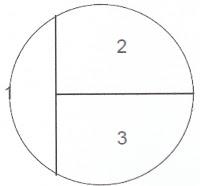
  7. Label your Petri dishes with a permanent marker dividing the bottom side (do not label the cover)In the area number 1 write the name of your group.

sample................Area 2 for the

sample...............Area 3 for the

8.To inoculate each sample, open the dish and slide the cotton swab gently on the surface. Close it.

9. Incubate the inoculated Petri dish overnight at 37 ºC.
Practica cultivo de E
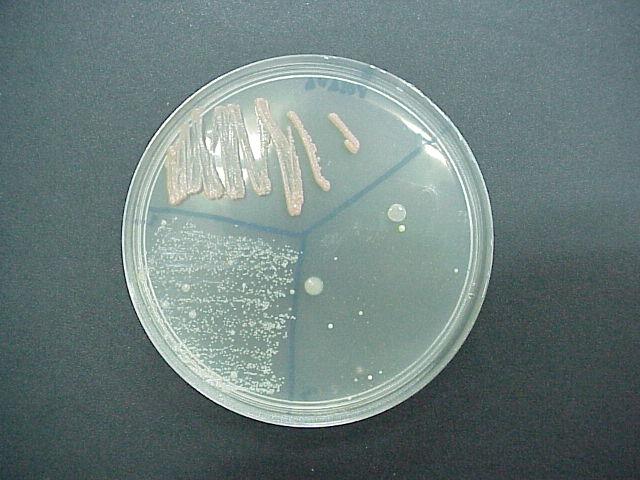
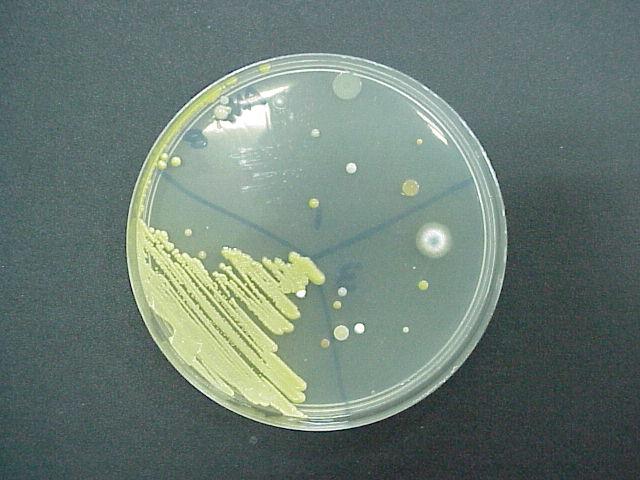
10. After 24 hours check if there are some colonies and take a photo of your results.

MVC-760FMVC-757F

C. Analysis of results.

Comment and write the conclusions of your study.

D. Observation of the samples by an optical microscope .

Prepare a glass slide and a coverslip.
With a wooden toothpick touch a little piece of a colony, place the sample on the slide, add a drop of water, cover it and focus with the microscope.
Enjoy the microscopic shapes!


PRACTICE 2 EL SIDA Y SU TRANSMISIÓN

1. INTRODUCCIÓN
El SIDA (síndrome de inmunodeficiencia adquirida) es una enfermedad de transmisión sexual que afecta a los humanos infectados por el VIH (virus de inmunodeficiencia humana). Se dice que una persona padece sida cuando su organismo, debido a la inmunodeficiencia provocada por el VIH, no es capaz de ofrecer una respuesta inmune adecuada contra las infecciones. A medida que el virus se reproduce, el organismo se hace cada vez más vulnerable ante enfermedades contra las cuales, en tiempos normales puede defenderse. A estas enfermedades se las denomina enfermedades oportunistas.
Puede suceder que el VIH, una vez ingresado en el organismo permanezca "en reposo" dentro de los linfocitos (células del sistema inmunitario) invadidos, a veces hasta 10 años. En esta situación, el paciente no tiene síntomas, por eso se le llama portador asintomático. Si bien no presenta síntomas, el portador asintomático puede contagiar a otras personas sin saberlo. Una persona que ha estado expuesta al virus presenta en su sangre anticuerpos (moléculas defensivas fabricadas por el organismo)frente al virus; se dice que es seropositivo.
La única causa de la transmisión es el intercambio de fluidos corporales, en particular la sangre y las secreciones genitales. También puede transmitirse de madre infectada a hijo durante el embarazo. El virus VIH no se puede transmitir por la respiración, la saliva, el contacto casual por el tacto, dar la mano, abrazar, besar en la mejilla, masturbarse mutuamente con otra persona o compartir utensilios como vasos, tazas o cucharas. La vía más frecuente de contagio es la vía sexual.
La enfermedad todavía no tiene un tratamiento curativo, y por esta razón la lucha debe centrarse en adecuadas tareas de prevención en la lucha contra el SIDA.


2. OBJETIVOS
• Ser conscientes de que el SIDA es una enfermedad extendida.
• Tener una visión global de la incidencia de la enfermedad.
• Comprobar que es una enfermedad que, sin uso del preservativo, puede ser de rápido contagio.


3. MATERIALES.


• Tubos de ensayo
• Gradilla
• Agua
• Solución de NaOH 0,1M
• Fenolftaleína o papel indicador de pH


4. METODOLOGÍA
En esta práctica vamos a simular contactos sexuales con otros compañeros y compañeras, mediante el intercambio de los fluidos corporales implicados en una relación sexual. Estos fluidos están representados por los líquidos de cada uno de los tubos de ensayo que van a llevar.
  1. Cogemos un tubo de ensayo que nos estrega el profesor.Todos los tubos menos uno representan a individuos sanos: uno, a un individuo portador del virus pero que desconoce que esta infectado
  2. A continuación, debéis simular contactos sexuales con otros compañeros y compañeras, intercambiando, mediante mezcla y posterior reposición, sus fluidos contenidos en los tubos de ensayo. El número de encuentros sexuales a realizar será de tres intercambios o “contactos”, anotando con quien habeis intercambiado “fluidos”.
Es conveniente que no os quedéis en una esquina de la clase o que sólo establezcais contactos con vuestras amistades más próximas.
  1. Una vez que hemos simulado el establecimiento de contactos sexuales esporádicos e indiscriminados, procedemos a analizar cuántos alumnos o alumnas se han contagiado de SIDA.se añaden unas gotas de indicador de pH fenolftaleína en cada tubo de ensayo, o se emplean tiras de papel indicador de pH. El primer método resulta más llamativo y espectacular para los alumnos y las alumnas, ya que los tubos de ensayo de los individuos no infectados permanecen transparentes, mientras que los de los infectados adquieren una coloración rosa (propia del medio básico).

5. RESULTADOS Y CUESTIONES
  1. ¿Cuántos alumnos han resultado infectados al finalizar la práctica?
  2. Escribe el nombre de los alumnos que han dado positivo en la prueba de detección, y para cada uno anota por orden los tres alumnos con los que han mantenido “relaciones sexuales”.
  3. Intenta localizar la persona originalmente infectada de VIH.
  4. ¿Qué opinas de la facilidad con que se extiende esta enfermedad? ¿Y qué opinas del uso del preservativo?


individuo
Contacto 1
Contacto 2
Contacto 3
individuo
Contacto 1
Contacto 2
Contacto 3
individuo
Contacto 1
Contacto 2
Contacto 3
1


21


41


2


22


42


3


23


43


4


24


44


5


25


45


6


26


46


7


27


47


8


28


48


9


29


49


10


30


50


11


31


51


12


32


52


13


33


53


14


34


54


15


35


55


16


36


56


17


37


57


18


38


58


19


39


59


20


40


60


Dª Josefa María Balsalobre Balibrea
D. José Saturno Carrillo
Biology Department